
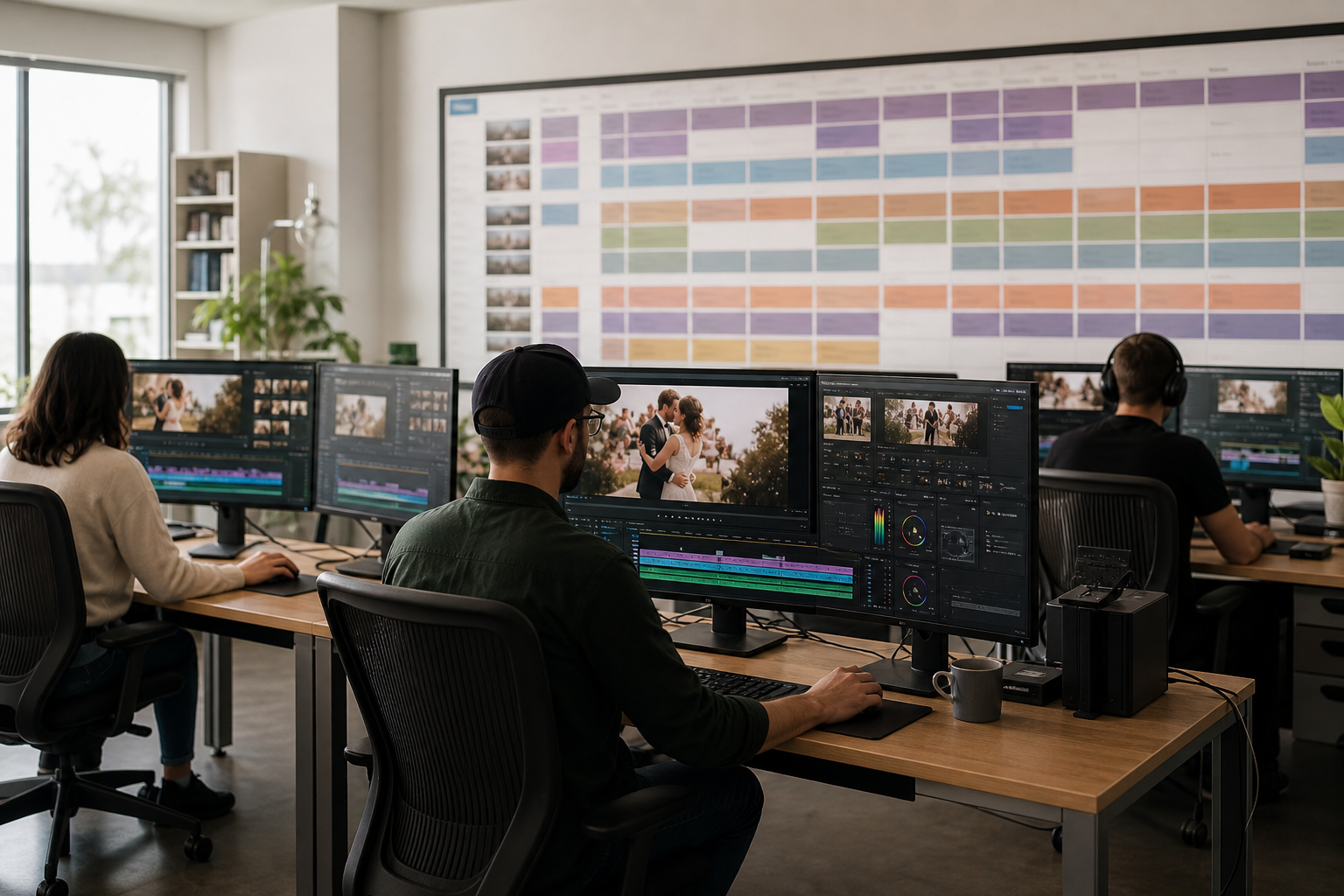
A documented wedding video editing workflow turns post-production from a collection of personal habits into a system the studio can measure, delegate and improve. It protects footage, preserves style and makes deadlines visible.
Stage 1: secure and organize media
Create verified copies before editing begins. Use a consistent folder structure for cameras, audio, music, graphics, project files and exports. Record missing media immediately rather than discovering it during the final review.
Stage 2: prepare the project
Generate proxies when needed, synchronize cameras and external audio, label important moments and import the studio’s current templates. A clean preparation stage allows creative editors to spend time on story instead of detective work.
Stage 3: build story and sound
Start with the emotional spine: vows, speeches, letters and natural moments. Choose music according to licensing and brand fit. Shape pacing before investing heavily in transitions or detailed grading.
Stage 4: color, audio and internal review
Match cameras, correct exposure, clean dialogue and check music levels on more than one listening system. Use a repeatable quality-control checklist before the film reaches the couple.
Stage 5: revisions and delivery
Collect consolidated feedback from one decision-maker, confirm the scope of each revision round and version files clearly. Archive the final project and delivery master according to the studio’s retention policy.
Put the system into practice
Start with one real project, document the result and improve the workflow before expanding it across the season. For more context, read the complete guide to outsourcing wedding video editing and how high-volume studios scale without losing control.
Frequently asked questions
What is the most important part of a wedding video workflow?
Clear ownership at every stage is essential. Each project should have a verified backup, current status, next action, responsible person and delivery date.
Where should quality control happen?
Use checkpoints after story assembly, after technical finishing and again after revisions. Waiting until export to discover structural or audio problems creates avoidable rework.
Can EditValue fit an existing studio workflow?
Yes. EditValue can work from the studio’s folder structure, references, review method and delivery standards, then add managed editing and QC capacity without forcing the studio into a generic template.
Give your studio the production house it needs.
EditValue combines style-matched wedding video editing, human quality control, organized revisions and flexible capacity—at a fraction of the cost of building the same operation in-house.