
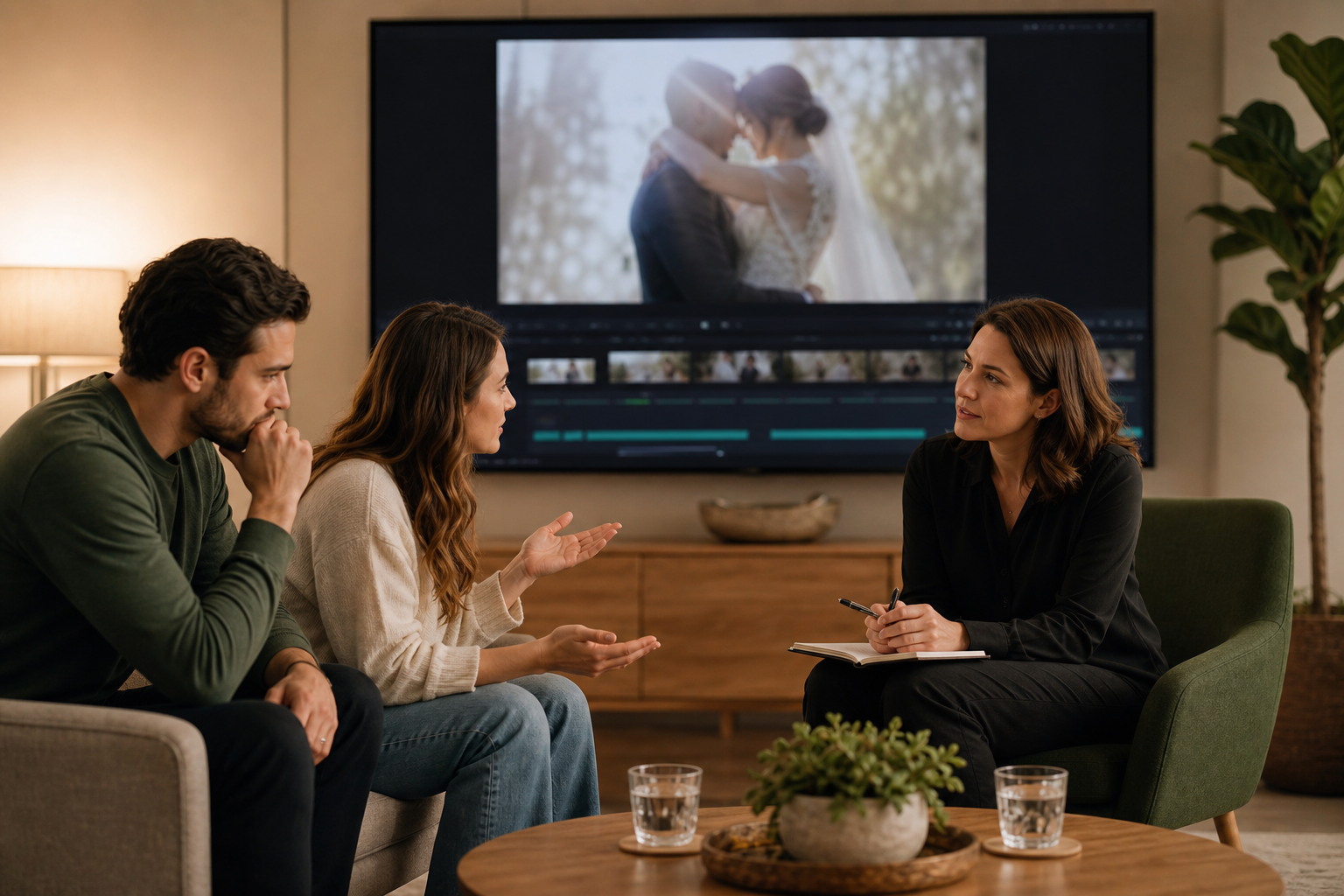
Revisions become expensive when the process is undefined. A fair wedding video revision policy gives couples confidence while protecting the studio from contradictory notes, moving targets and repeated re-exports.
Define what a revision includes
Explain the number of rounds, how requests are collected, what counts as a creative change and what falls outside the original package. Distinguish corrections from a complete change of direction.
Require consolidated feedback
Ask the couple to submit one approved list through a single channel. When several relatives send separate notes, the studio cannot know which instruction has authority.
Use timestamps and priorities
Every request should identify the exact moment, requested change and importance. This makes the edit faster and exposes conflicting requests before work begins.
Set response windows
Give clients a reasonable review period and explain what happens when feedback arrives late. Tie final delivery dates to timely client decisions so the studio is not responsible for indefinite pauses.
De-escalate difficult conversations
Acknowledge the concern, restate the shared goal and offer concrete options. Do not argue about taste. Show how each option affects pacing, story, deadline or additional cost.
Put the system into practice
Start with one real project, document the result and improve the workflow before expanding it across the season. For more context, read the complete guide to outsourcing wedding video editing and how high-volume studios scale without losing control.
Frequently asked questions
How many revision rounds should a wedding studio include?
Many studios work well with two clearly defined rounds. More important than the number is requiring consolidated, timestamped feedback and explaining what counts as a correction versus a new creative direction.
How can a studio stop scattered revision requests?
Use one review channel, one decision-maker and one consolidated list per round. Do not begin changes while comments are still arriving through email, text messages and calls.
Can EditValue manage revisions with couples?
Yes, when the studio enables it. EditValue can organize requests and help manage the client-satisfaction process, giving the studio a production team rather than another editor to supervise.
Give your studio the production house it needs.
EditValue combines style-matched wedding video editing, human quality control, organized revisions and flexible capacity—at a fraction of the cost of building the same operation in-house.