
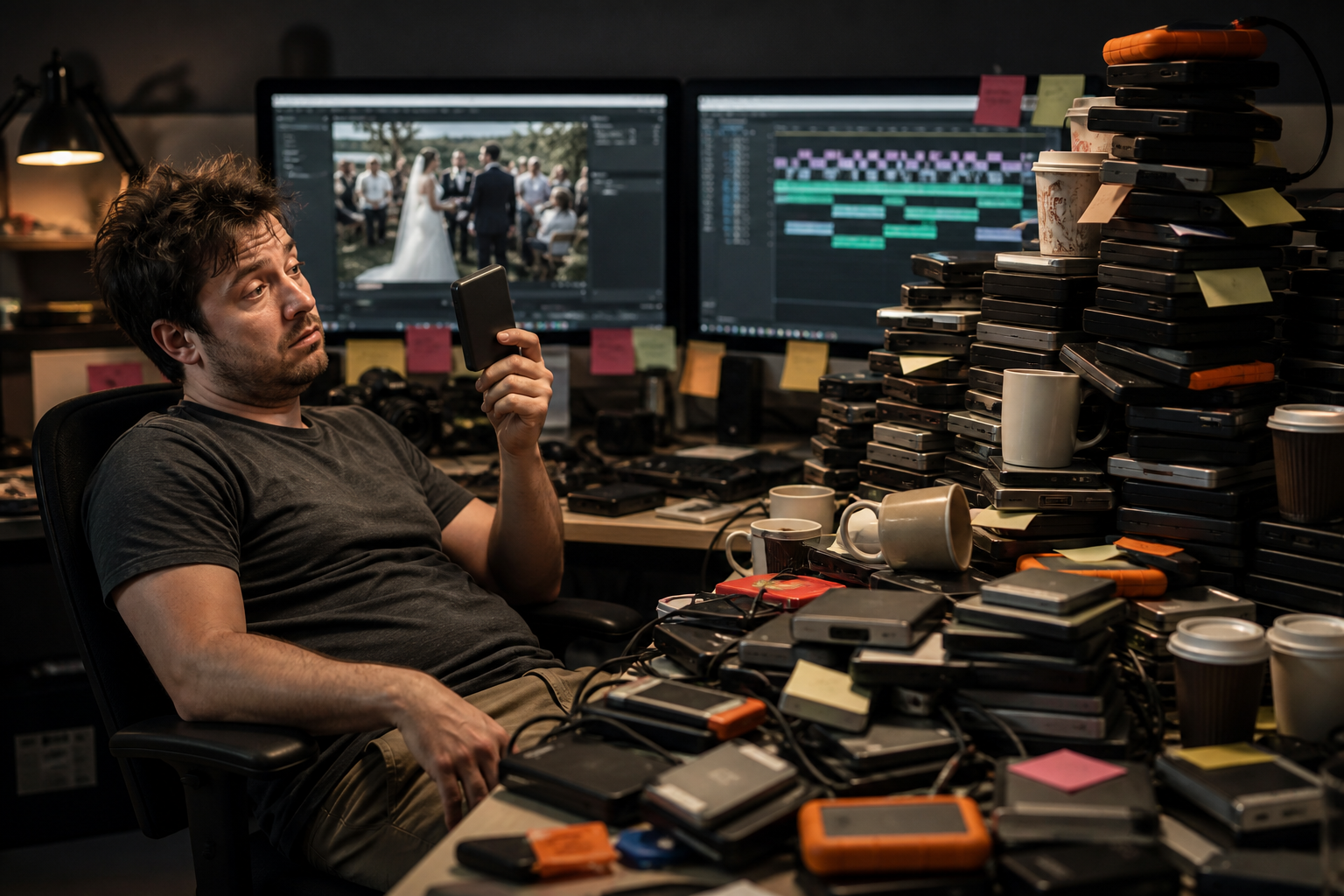
A new editor should not be expected to learn a studio through scattered links and memory. Structured onboarding reduces early revisions, protects live projects and reveals whether the partnership can scale.
Prepare one onboarding package
Include the current style guide, representative finished films, project template, folder structure, export presets, music rules, turnaround expectations and feedback channel. Remove outdated references before sharing it.
Choose a representative test project
Avoid selecting the easiest wedding or the most chaotic one. Use a normal project that contains the cameras, audio, lighting changes and storytelling decisions the editor will regularly face.
Set checkpoints before the final cut
Review organization or a short opening sequence before the editor completes the film. Early calibration prevents a full timeline from being built on the wrong pacing or story direction.
Give specific, reusable feedback
Explain why a change matters and identify the rule behind it. Save recurring feedback in the style guide so the same correction does not need to be repeated on every project.
Measure operational fit
Evaluate communication, reliability, file discipline and response to feedback alongside creative quality. The best long-term editor makes the studio’s whole workflow more predictable.
Put the system into practice
Start with one real project, document the result and improve the workflow before expanding it across the season. For more context, read the complete guide to outsourcing wedding video editing and how high-volume studios scale without losing control.
Frequently asked questions
How long should onboarding a wedding video editor take?
A useful onboarding process should prove style, communication and technical accuracy on one representative project before real volume is assigned. The goal is not speed alone; it is a repeatable result the studio can trust.
What should be included in an editor onboarding package?
Include complete reference films, a practical style guide, project structure, music and pacing preferences, export specifications, quality-control standards and examples of useful feedback.
Can EditValue learn a studio’s existing style?
Yes. EditValue starts with real footage and references, documents the studio’s decisions and turns them into a working playbook. The studio gains an entire managed production department without recruiting and training it alone.
Give your studio the production house it needs.
EditValue combines style-matched wedding video editing, human quality control, organized revisions and flexible capacity—at a fraction of the cost of building the same operation in-house.