
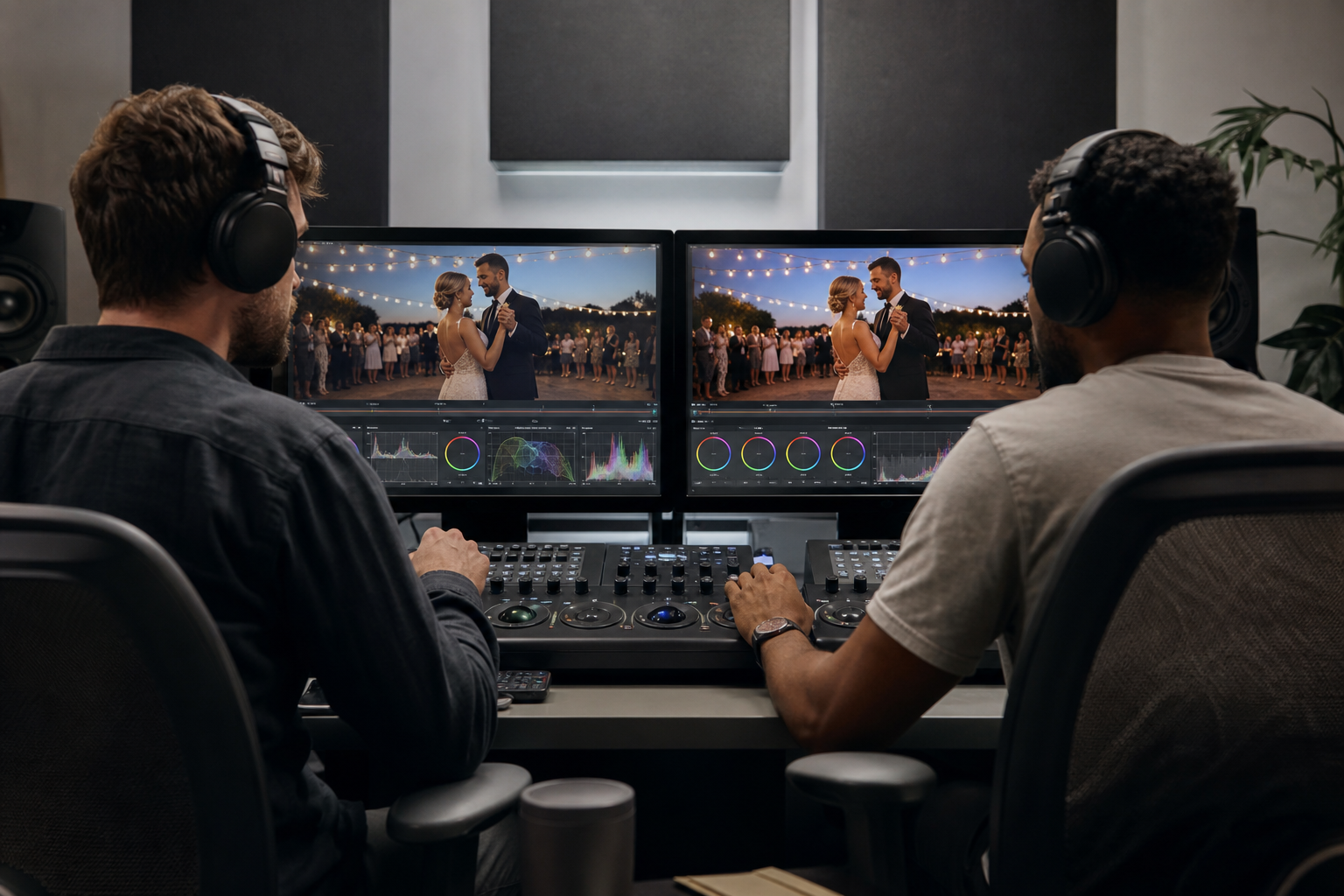
“Make it feel like us” is not a usable editing brief. A strong wedding video style guide converts taste into observable decisions without forcing every film into the same template.
Use examples with explanations
Choose a small set of finished films and annotate why they represent the brand. Point out opening rhythm, dialogue choices, music energy, shot duration, transitions, color and the balance between candid and posed moments.
Define the non-negotiables
Document technical requirements, licensed-music rules, title treatment, aspect ratios, loudness targets, export settings and elements that must never appear. These standards reduce preventable revision work.
Describe ranges, not rigid formulas
Creative work needs room to respond to each couple. Define acceptable pacing, film lengths and emotional tone as ranges, then show when an editor should depart from the normal pattern.
Build a feedback dictionary
Replace vague notes such as “make it more cinematic” with specific language: hold reaction shots longer, reduce speed ramps, prioritize natural audio or warm skin tones. Consistent vocabulary makes learning cumulative.
Keep the guide alive
Review it after every group of projects. Add recurring corrections, retire outdated references and separate studio-wide rules from preferences unique to one client or package.
Put the system into practice
Start with one real project, document the result and improve the workflow before expanding it across the season. For more context, read the complete guide to outsourcing wedding video editing and how high-volume studios scale without losing control.
Frequently asked questions
What belongs in a wedding video style guide?
Document story priorities, pacing, dialogue use, music direction, color references, transitions, titles, sound treatment, export settings and several complete approved films with explanations.
Will a style guide make every wedding film feel identical?
It should not. A good guide protects the studio’s recognizable decisions while leaving room for the editor to respond to each couple, venue and story.
How does EditValue maintain a studio’s style across editors?
EditValue turns references and feedback into a practical playbook, calibrates editors on real projects and adds review before delivery. The result is managed capacity without surrendering creative control.
Give your studio the production house it needs.
EditValue combines style-matched wedding video editing, human quality control, organized revisions and flexible capacity—at a fraction of the cost of building the same operation in-house.