
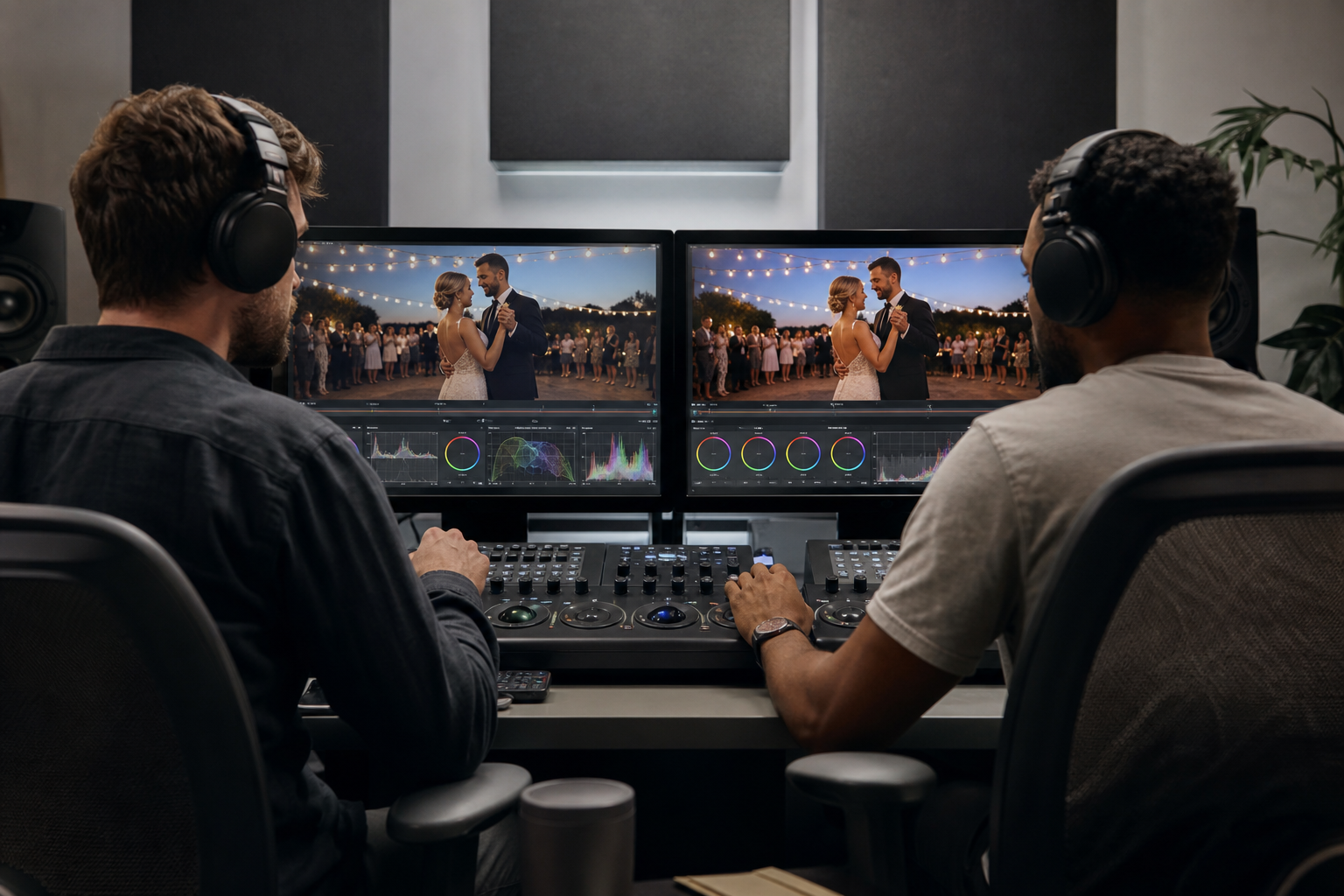
 Adding editors increases capacity, but it can also expose a studio to uneven pacing, color, music choices and storytelling. Clients booked the style they saw in your portfolio. If each film feels like it came from a different company, growth weakens the brand it was meant to support. Consistent wedding video editing requires a system that transfers creative knowledge from the studio to every editor.
Why editor consistency becomes difficult
Most studios begin with taste living in one person’s head. The owner knows which vows matter, how long a shot should breathe and what “cinematic” means for the brand. New editors receive a few links and are expected to infer hundreds of decisions. When results vary, the problem is often incomplete direction rather than lack of talent.
Create a usable wedding-film style guide
A useful guide is visual and specific. Document:
- Typical film structure and duration.
- How dialogue drives the story.
- Preferred pacing for preparations, ceremony and reception.
- Rules for slow motion, transitions and speed changes.
- Music energy, licensing and track-selection responsibility.
- Color references, LUT starting points and skin-tone priorities.
- Audio cleanup, ambience and sound-design expectations.
- Titles, fonts, logo placement and export specifications.
Include several complete approved films and annotations explaining why decisions work. A showreel is too compressed to teach structure.
Use a calibration project
Before assigning volume, give each editor one representative wedding. Review the first section early so fundamental misunderstandings do not spread across the whole film. Calibration should cover story, technical setup and feedback style.
Separate non-negotiables from creative freedom
Some standards protect the brand: spelling, skin tones, audio clarity, required moments and delivery formats. Other choices benefit from editorial judgment. Label the difference. A guide that dictates every cut becomes slow to use and prevents the editor from responding to the couple’s actual story.
Centralize feedback
Use one reviewer and one consolidated set of time-coded notes. When owners, shooters and clients send separate messages, the editor receives conflicting direction. Keep a record of recurring corrections and add them to the style guide so the same issue is not explained on every wedding.
Build technical quality control
Every film should pass a checklist for missing media, flash frames, dialogue intelligibility, music levels, camera matching, stabilization artifacts, title spelling, aspect ratio and export settings. Technical QC should be performed separately from the emotional story review.
Track consistency as an operating metric
Monitor first-cut approval rate, revision categories, internal review time and repeat corrections by editor. The objective is not to punish individual editors. It is to identify missing standards, training needs and briefs that create ambiguity.
How to change editors without changing your brand
Store references, notes, templates and project files under studio control. When an editor leaves, the next person should inherit a documented system rather than start from memory. Assign a calibration project and compare it against the same acceptance criteria used for existing editors.
EditValue and style-matched post-production
EditValue works from your references and creative requirements so outsourced capacity supports the studio’s established identity. Structured delivery and revision processes help the relationship improve across repeated projects.
Request a free wedding reel preview using a reference film that best represents your brand.
Frequently asked questions
Can several editors produce one consistent studio style?
Yes, when the studio documents its decisions, calibrates editors on representative projects, centralizes feedback and separates non-negotiable brand rules from creative freedom.
What causes inconsistency between wedding video editors?
Inconsistency usually comes from vague references, private feedback, missing technical standards and assigning volume before an editor has passed a calibration project.
How does EditValue keep outsourced editing consistent?
EditValue builds a studio-specific playbook, trains against real references and reviews work before delivery. That gives the studio scalable capacity while keeping its own signature visible.
Give your studio the production house it needs.
EditValue combines style-matched wedding video editing, human quality control, organized revisions and flexible capacity—at a fraction of the cost of building the same operation in-house.